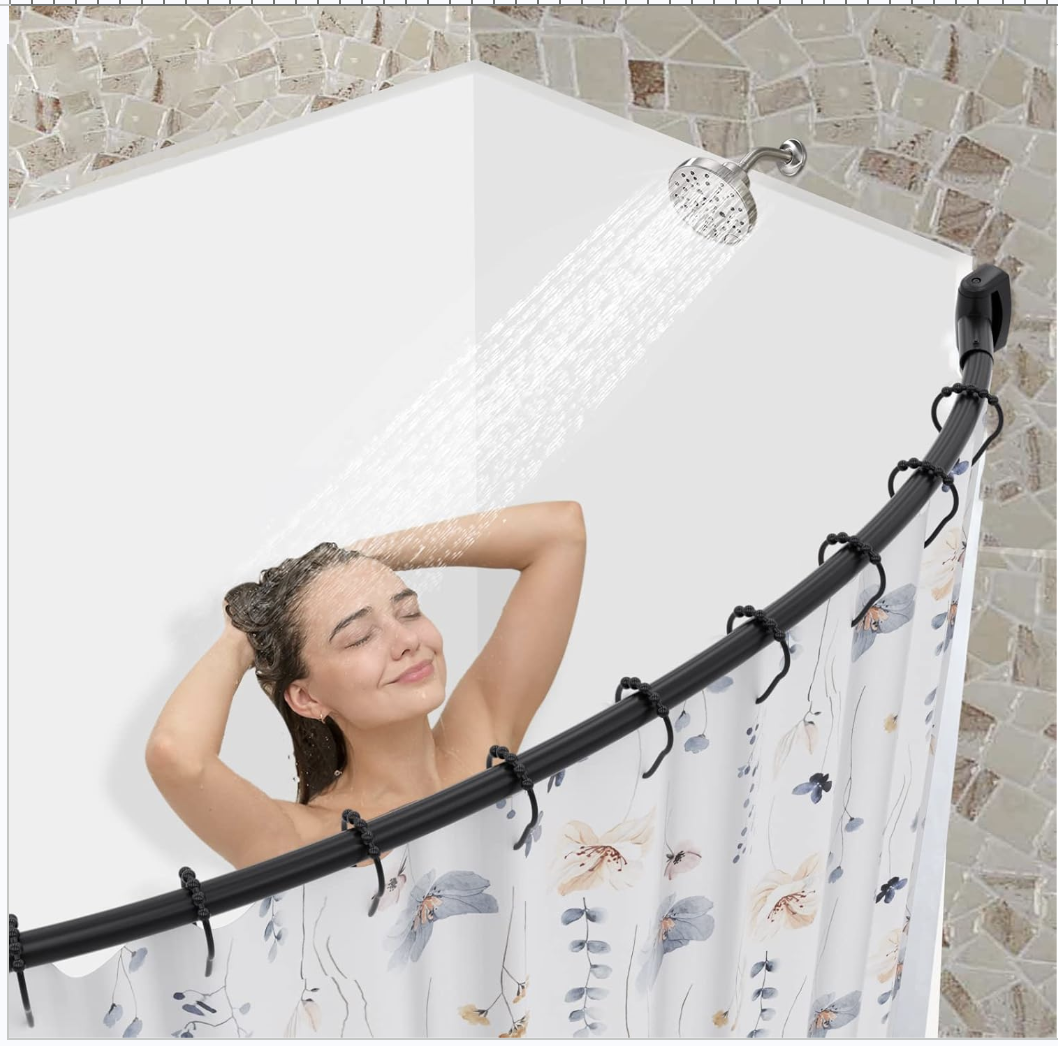
The curved shower curtain rod replaced the straight one in every mid-tier hotel in America. Same cost. Same wall mount. Same curtain hooks. The moment you stepped into a shower fitted with one, you knew the old design was finished — not because anyone told you, but because more room is immediately, obviously better.
Consumer research is approaching a moment like that.
What makes something a canonical design
A canonical design has three characteristics: the second you encounter it, you know it’s better; it operates at the same cost and complexity level as what it replaces; and it sweeps the market so completely that the prior approach fades from memory.
The curved rod didn’t fix a broken shower. The shower worked fine. It gave you more room — the same shower, meaningfully better. Adding behavioral purchase data to a survey works the same way.

What surveys are designed to capture — and where they reach their ceiling
Surveys are excellent research instruments. They capture intent, opinion, and stated preference at scale. They surface attitudes that behavioral data can’t touch. A well-designed survey remains one of the most efficient tools in a researcher’s kit.
The ceiling isn’t the method — it’s human memory and self-awareness. Nobody can tell you from the top of their mind exactly how many times they’ve bought a particular brand in the past year, whether their purchasing has been shifting, or what they actually paid the last three times they bought rechargeable batteries. That’s not evasion; it’s just the limit of what people can reliably report about themselves.
“I’ve been running surveys for 21 years. You’re telling me I can’t add a Question 11 — everything that person actually bought on Amazon for the past five years?”
The survey captures expressed preference. Purchase data captures revealed behavior. Until now, most research teams could only access one.
What behavioral purchase data adds to consumer research
What Ario calls Question 11 is not a question. It’s the ability to append a respondent’s real purchase history — what they bought on Amazon, Costco, and other major platforms over the past one to five years — to every survey response they give. A 10-question survey becomes a 10-question survey plus a behavioral record. The same respondent. The same study. A significantly richer picture.
The survey platform doesn’t change. The panel doesn’t change. The questionnaire doesn’t change. Purchase history is appended to existing responses — and once a research team can see what their respondents actually buy, the teams that can’t face a structural disadvantage. Not a philosophical one. A practical one.
The surveys you already ran get better. Retroactively. Every previous response from a respondent who has linked their purchase history can be recontextualized with what you now know about their actual behavior.
Three survey questions, with and without purchase data
These are real survey questions, run against real purchase data. Each example shows what the survey answer captures on its own — and what opens up when behavioral history is added.
Q1 — Brand Preference
Survey response + behavioral data enrichment · User 3313 · Battery orders, 3-year history
Share of Wallet Over Time
Battery orders by brand
The survey answer is accurate — both Energizer and Duracell are top brands for this respondent. But the behavioral layer reveals a brand switch already in progress: Energizer dominant for two years, then a precipitous decline; Duracell surging in the most recent period. The survey captures a snapshot. Purchase data shows the trajectory.
Q2 — Device Usage
Survey response + behavioral data enrichment · User 3313 · Amazon purchases of battery-requiring products
Battery-Requiring Products Purchased
From full Amazon purchase history, not just battery orders
The survey correctly identifies children’s toys as a category. But when you look at this person’s full Amazon purchase history — not just batteries, but everything that needs them — kids’ toys account for 20 of 28 battery-requiring purchases. That’s a household whose battery demand is almost entirely driven by one category, which tells you something the survey answer alone never could.
Q3 — Price Perception
Survey response + behavioral data enrichment · Van Westendorp · Pack of 16 rechargeable AA batteries
Acceptable range: $6 – $12
Actual Purchases Above $17
User says $20 is “too expensive” but…
The respondent says $20 is too expensive. Their actual purchase history shows they paid $23.67 and $20.94 in prior years — behavior that contradicts their stated threshold entirely. This isn’t dishonesty; it’s the gap between what feels right to report and what people actually do at the point of purchase. Behavioral data doesn’t replace Van Westendorp analysis. It grounds it.
The curved shower rod didn’t arrive with a marketing campaign. It arrived, and anyone who used one immediately understood the straight version was finished. Question 11 is available now. The surveys you’ve already run are waiting to get better.
Interested in adding Question 11 to your survey? Reach out to enterprise@ariodata.com.